Solid Tires (Black and Non-Marking) vs Pneumatic Tires: Which One Is Better for Your Forklift?
Choosing the right forklift tire affects far more than basic movement. Tire type has a direct impact on traction, operator comfort, floor protection, puncture risk, maintenance needs, and overall machine performance. In many operations, the wrong tire choice can increase downtime, damage indoor floors, reduce efficiency, or make the forklift less suitable for the actual working environment.
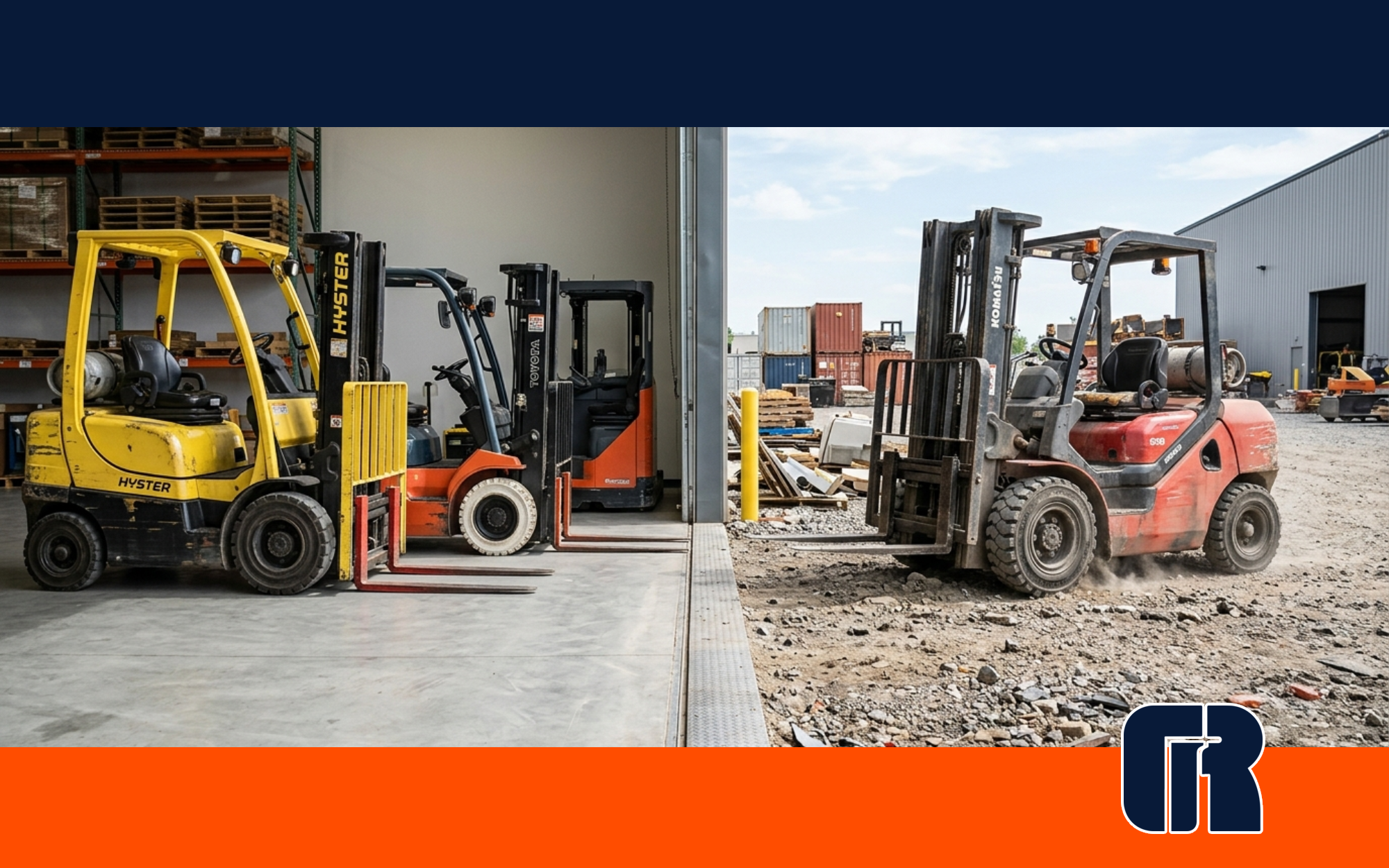
Solid Tires (Black and Non-Marking) vs Pneumatic Tires: Which One Is Better for Your Forklift?
Choosing the right forklift tire affects far more than basic movement. Tire type has a direct impact on traction, operator comfort, floor protection, puncture risk, maintenance needs, and overall machine performance. In many operations, the wrong tire choice can increase downtime, damage indoor floors, reduce efficiency, or make the forklift less suitable for the actual working environment. This guide explains the difference between black solid tires, non-marking solid tires, and pneumatic tires, and how to choose the right option for your application.
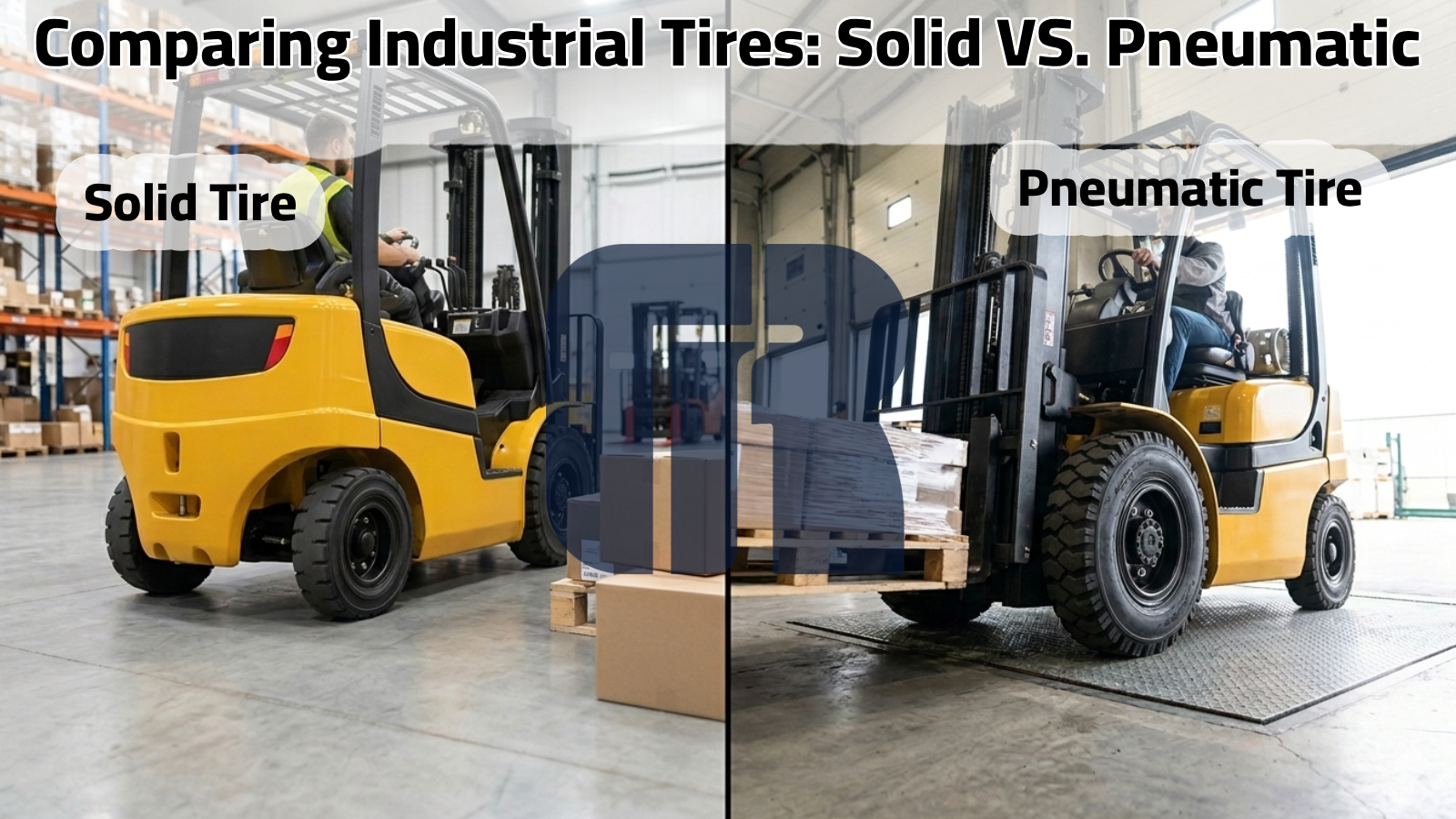
Why Tire Selection Matters
Forklift tires are a major part of machine performance and operational suitability. The correct tire helps improve stability, supports safe handling, protects the floor, and reduces unnecessary maintenance issues. The wrong tire can create avoidable costs and operating problems even if the forklift itself is otherwise suitable for the job.
Indoor warehouse operations, clean production environments, loading areas, and rough outdoor yards all place very different demands on forklift tires. That is why tire selection should always match the real work environment.
Main Forklift Tire Types in This Comparison
A common industrial option for indoor operations. They offer strong puncture resistance, durability, and reliable performance on smooth warehouse or factory floors.
Designed for clean or finished floors where black tire residue is not acceptable. They retain the solid tire benefit of puncture resistance while helping protect floor appearance.
Air-filled tires generally preferred for rougher outdoor environments. They offer better shock absorption, improved ride comfort, and stronger performance on uneven surfaces.
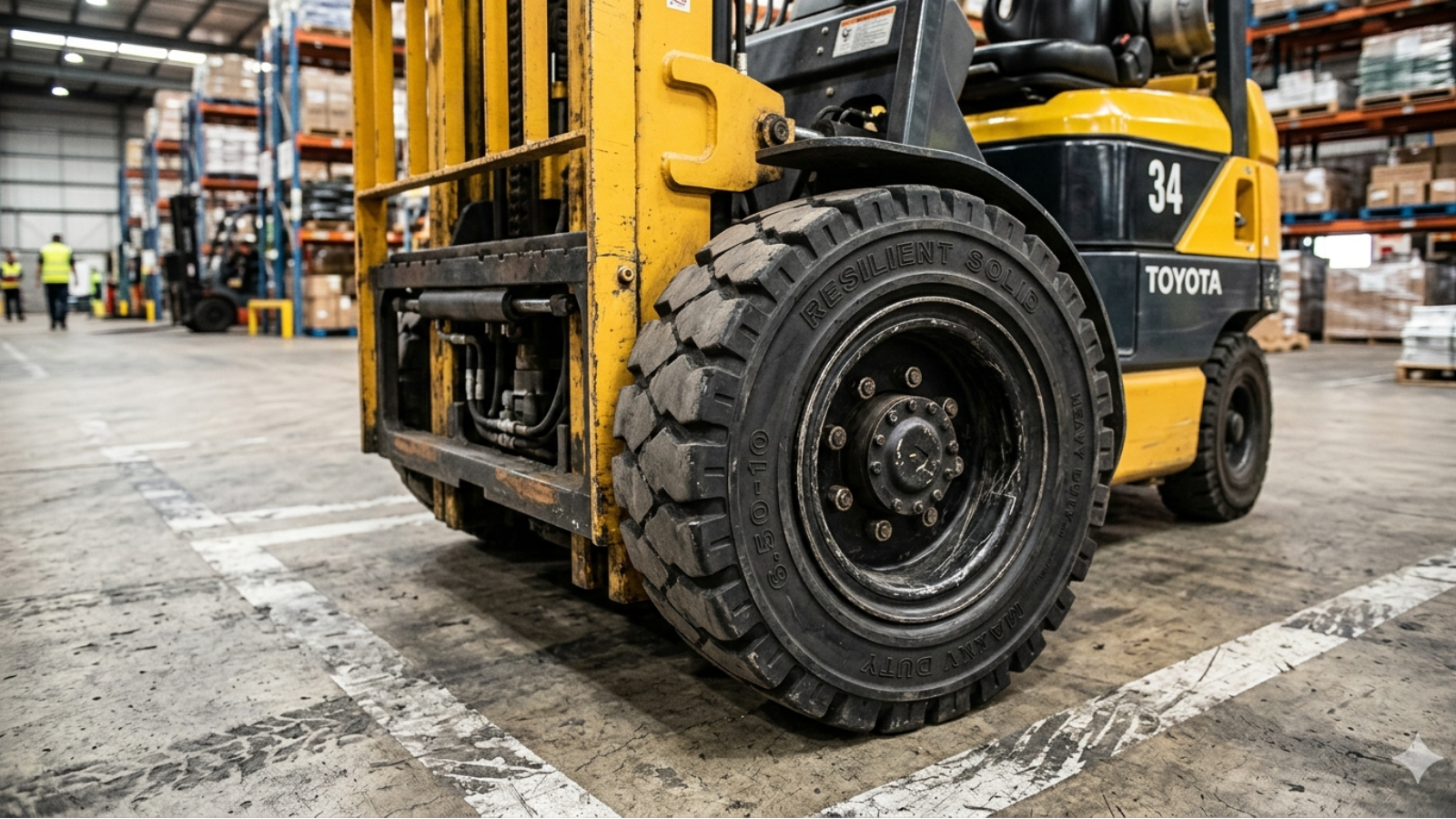
What Are Black Solid Tires?
Black solid tires are made from solid rubber compounds rather than being air-filled. They are widely used in warehouses, factories, logistics facilities, and other controlled indoor environments where puncture resistance and durability are important.
Main Benefits of Black Solid Tires
What Are the Limitations of Black Solid Tires?
Black solid tires can leave dark marks on light-colored or sensitive floors. This can be a problem in facilities where cleanliness, presentation, or floor finish protection is important.
Because they are solid rather than air-filled, they generally provide less shock absorption than pneumatic tires, especially on rougher surfaces or outdoor ground.
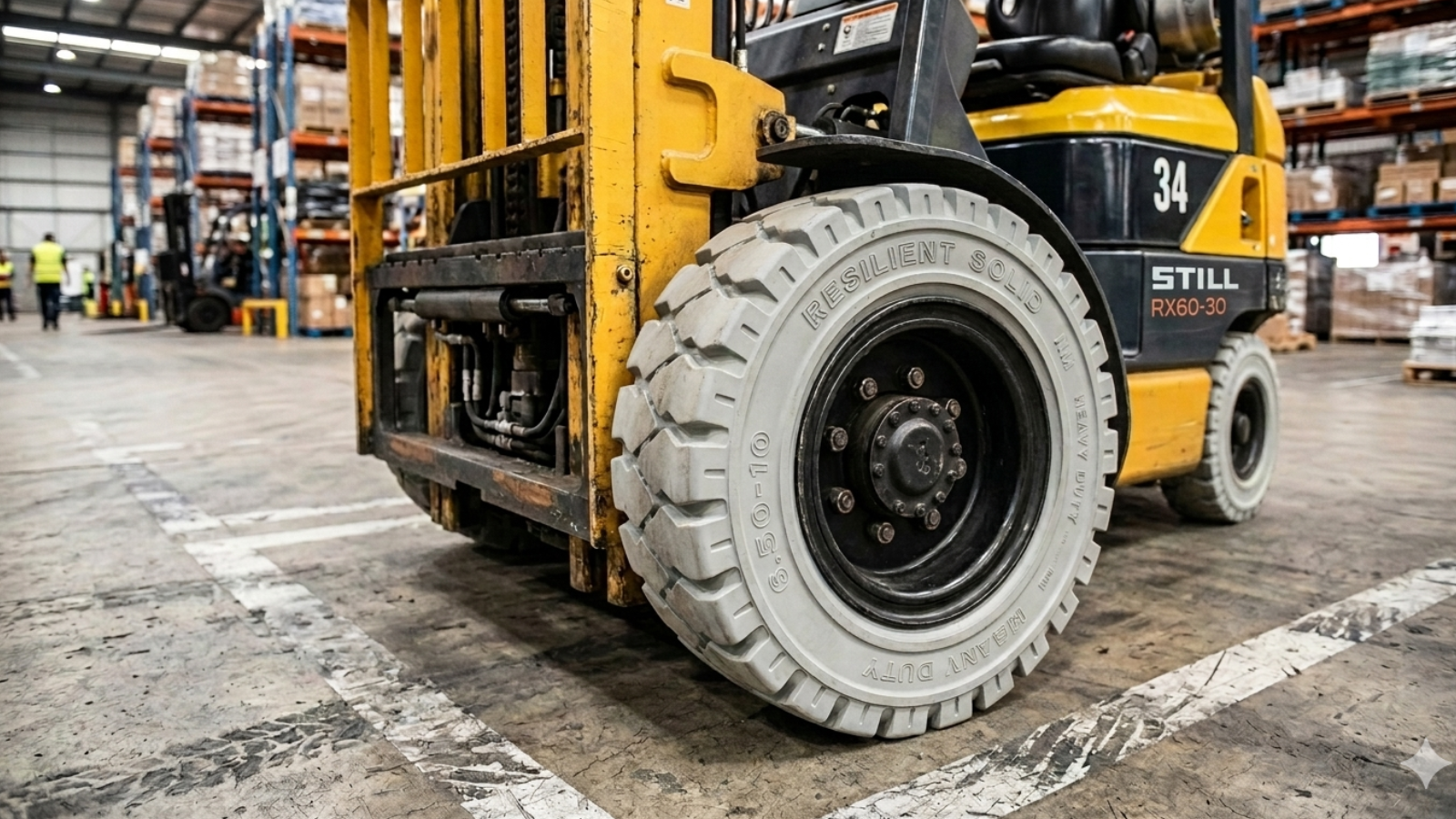
What Are Non-Marking Solid Tires?
Non-marking solid tires are designed for operations where black tire residue is unacceptable. They are commonly used in food facilities, pharmaceutical environments, clean warehouses, electronics operations, and finished indoor spaces where floor appearance and cleanliness matter.
Cleaner Floors
Their main advantage is reducing or avoiding black marks on finished indoor surfaces.
Puncture Resistance
Like other solid tires, they keep the benefit of operating without air and without normal puncture-related flats.
Indoor Suitability
They are well suited to clean indoor applications where appearance standards or hygiene requirements are higher.
Higher Cost
They are often more expensive than standard black solid tires, so they are usually chosen for a specific reason.
What Are Pneumatic Tires?
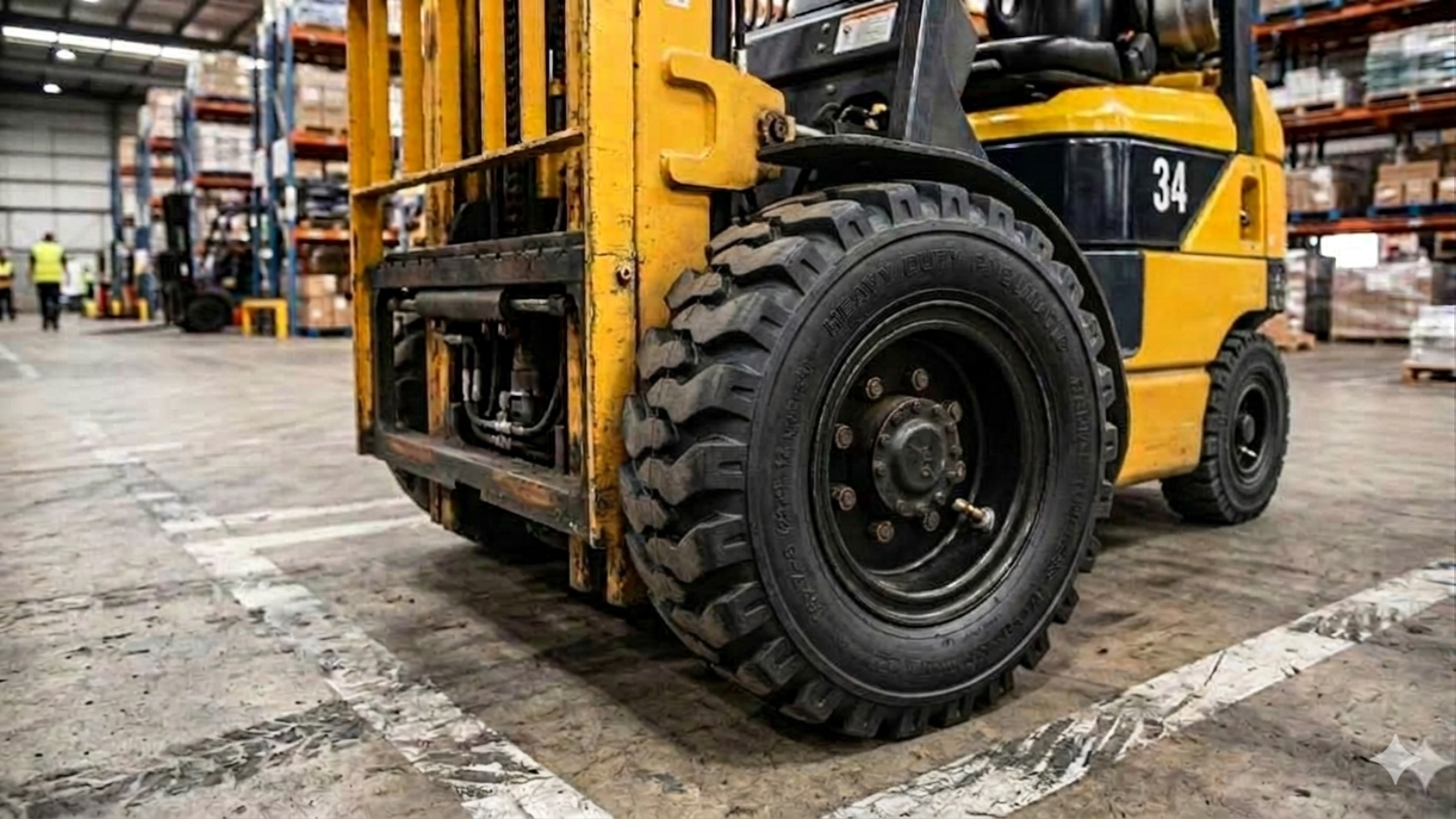
Pneumatic tires are air-filled tires that provide better shock absorption and improved ride comfort. They are often used on forklifts operating outdoors or on surfaces that are rough, uneven, or only partially paved.
In yards, construction areas, and mixed outdoor applications, pneumatic tires are often preferred because they are better suited to ground irregularities and more demanding travel conditions.
Main Benefits of Pneumatic Tires
Pneumatic tires absorb shocks better than solid tires, which improves operator comfort during longer working shifts.
They perform better on uneven, rough, or partially unpaved surfaces compared with solid tire options.
In many outdoor environments, pneumatic tires offer stronger traction and more forgiving travel performance.
What Are the Limitations of Pneumatic Tires?
They can be punctured or damaged by nails, scrap, sharp metal, or harsh ground conditions. They usually require more maintenance attention than solid tires. Unexpected downtime can happen if a tire loses air or suffers damage. They are not always the preferred option for clean or floor-sensitive indoor environments. Their strengths are more valuable outdoors than on smooth indoor warehouse floors.
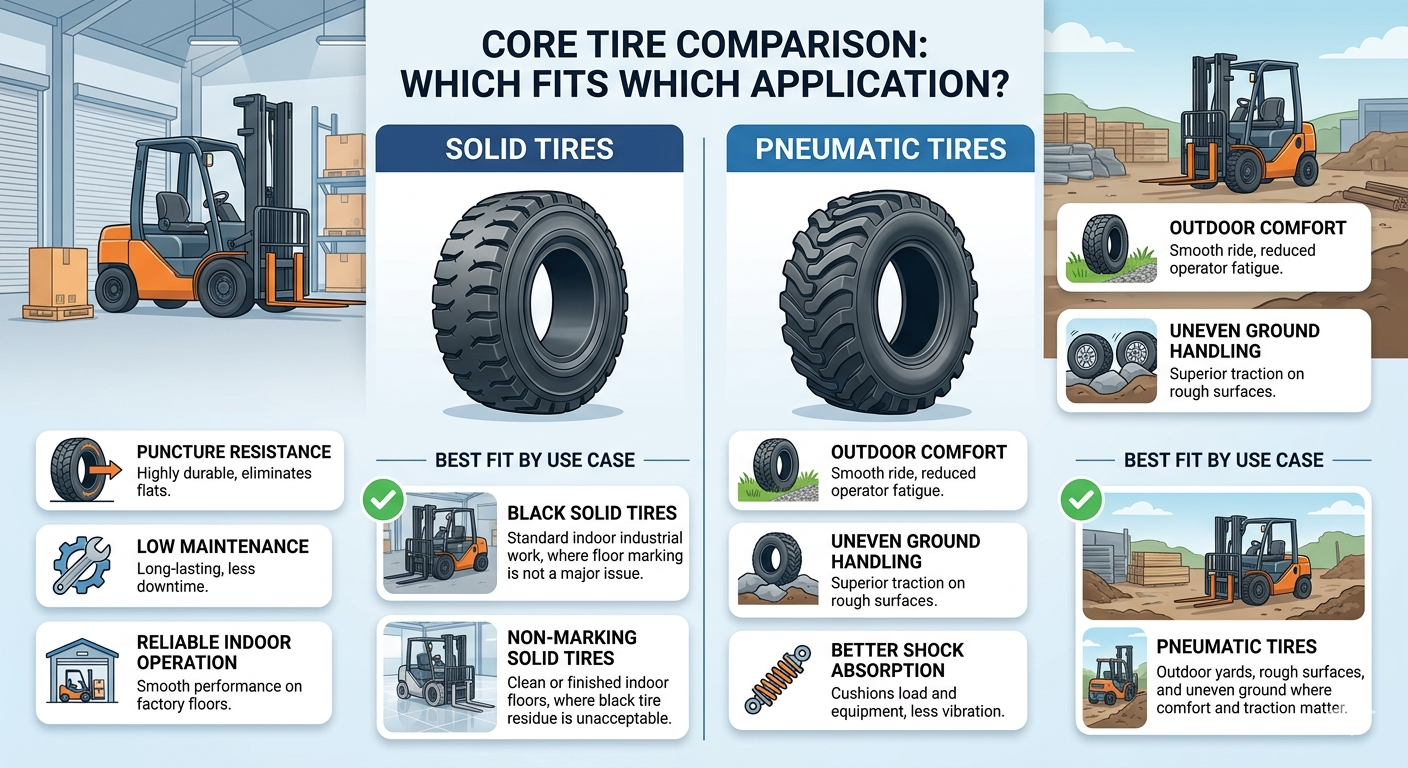
Core Comparison: Which Tire Fits Which Application?
The main difference is straightforward. Solid tires are usually chosen for puncture resistance, low maintenance, and reliable indoor operation. Pneumatic tires are generally chosen for outdoor comfort, uneven ground handling, and better shock absorption.
Best Fit by Use Case
Common Mistakes When Choosing Forklift Tires
One of the most common mistakes is keeping the same tire type without reviewing the actual operating environment. Another is selecting tires only by initial price rather than looking at floor protection, puncture exposure, and long-term suitability.
Black solid tires may be a poor choice in clean facilities where floor marks are unacceptable. Pneumatic tires may be a poor choice in debris-heavy areas where puncture risk is high. Solid tires may also be the wrong answer for demanding outdoor ground that needs more shock absorption.
Final Thoughts
There is no single forklift tire that is best for every operation. The correct choice depends on the floor or ground condition, puncture exposure, cleanliness requirements, and whether the forklift works mainly indoors or outdoors.
Black solid tires are a strong option for standard indoor industrial use. Non-marking solid tires are ideal when floor cleanliness matters. Pneumatic tires are usually the better option for rougher outdoor conditions and greater ride comfort. When tire type matches the actual job environment, the forklift performs better and the operation becomes safer and more efficient.
Need Help Choosing the Right Forklift Tire Setup?
If your operation involves warehouses, loading areas, clean indoor floors, or rough outdoor yards, choosing the right tire type is part of choosing the right forklift. For projects in Saudi Arabia, Rakaz Al Joudah General Contracting can help you select the right machine configuration based on real operating conditions.
Comments (0)