How Ground Conditions Affect the Choice of Lifting Equipment
Ground conditions have a direct impact on lifting equipment safety, stability, and performance. This article explains how smooth floors, rough terrain, sandy ground, and sloped surfaces affect the choice of the right machine for the job.
How Ground Conditions Affect Lifting Equipment Selection
Selecting lifting equipment is not only about working height or load capacity. Ground conditions directly affect machine stability, mobility, safety, and suitability for the task. Smooth concrete, rough terrain, loose sand, slopes, and delicate finished flooring each require different considerations. This guide explains how ground conditions influence lifting equipment selection and what to check before renting or operating a machine.
Why Ground Conditions Matter When Choosing Lifting Equipment
Ground conditions influence stability, maneuverability, access, and the forces transferred from equipment to the supporting surface. A machine may meet the required working height and rated capacity but still be unsuitable if the ground cannot safely support it.
Before selecting a machine, determine whether the surface is level, compacted, wet, slippery, damaged, or affected by nearby excavations. Evaluate the ground along the entire travel route as well as the planned working position.
Common Ground Types and Their Impact on Equipment Selection
Common in warehouses, factories, and commercial buildings. Firm, level concrete often suits electric scissor lifts and electric forklifts, provided the floor has adequate load-bearing capacity and the machine is approved for the intended use.
Construction sites may require rough-terrain equipment with suitable tires, traction systems, and ground clearance. However, rough-terrain capability does not remove the need to verify stable working conditions.
Loose sand and soft soil can allow wheels or stabilizers to sink, increasing the risk of instability. Ground bearing strength and load distribution must be assessed before equipment movement or lifting.
Slopes affect machine balance and permitted operation. Finished floors such as epoxy, tiles, and coated concrete may need suitable non-marking tires and checks for concentrated loading.
Ground Assessment Checklist Before Renting Lifting Equipment
Site conditions should be reviewed before placing a rental order. Working height alone is not sufficient to determine the correct machine, particularly where travel routes or floor strength introduce additional restrictions.
Important Questions Before Equipment Selection
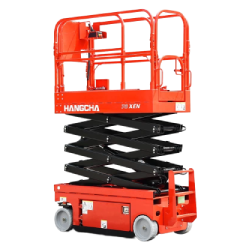


Choosing Scissor Lifts, Boom Lifts, and Forklifts for Different Ground Types
Different lifting machines are designed for different operating environments. Understanding these differences can help improve equipment selection and reduce avoidable rental delays.
For firm and level working surfaces, explore our scissor lift equipment . For elevated tasks requiring horizontal outreach, browse our boom lifts . For warehouse and material handling applications, the condition of the travel route and floor loading must also be considered when selecting a forklift.
Ramz Rikaz Al Joudah Trading Est. (RJTE) provides lifting and material handling equipment rental solutions for different construction and industrial applications in Saudi Arabia.
Smooth Concrete Floors: When Are Electric Lifts Suitable?
Electric scissor lifts and electric forklifts can be suitable for clean, level concrete floors. Their electric powertrains avoid local engine exhaust emissions and generally produce less noise during operation.
A concrete floor may contain cracks, service openings, weak slabs, or unsupported areas. Verify floor loading limits, particularly for elevated work platforms, mezzanines, suspended slabs, and concentrated wheel loads.
Rough Terrain: Why Specialized Lifting Equipment Matters
Outdoor construction sites frequently have gravel, uneven access routes, or partially prepared surfaces. Machines designed for smooth indoor floors may be unsuitable for these conditions.
Suitable Tires
Rough-terrain tires can improve traction and travel performance on appropriate outdoor surfaces, subject to the machine's operating limits.
Higher Ground Clearance
Greater clearance helps certain equipment move over uneven terrain and modest obstacles, provided the route is suitable.
Appropriate Support and Stability
Equipment designed for rough terrain may offer better site mobility, but lifting stability still depends on the approved operating position, ground strength, and stabilizer arrangements.
Controlled Travel
Correct equipment selection reduces the likelihood of traction problems and uncontrolled movement. Always follow travel speed, slope, and terrain limits.
Sandy and Soft Ground: Understanding Bearing Capacity Risks
Sandy surfaces are common on construction sites in Saudi Arabia. Although equipment may be capable of driving across some sandy areas, this does not automatically mean the same ground is safe for lifting or supporting outriggers.
Wheels or outrigger pads may sink into weak soil. Ground that appears firm may fail under concentrated machine loads. Uneven settlement can cause loss of stability during lifting. Engineered support mats or suitable load-distribution measures may be required. Never assume that four-wheel drive or rough-terrain tires compensate for inadequate ground strength.
How Slopes, Moisture, and Finished Floors Affect Safe Operation
Ground conditions can change during a working shift. Rain, spills, ground settlement, and vehicle movements may create hazards that were not present during the original site inspection.
Machine travel gradeability does not necessarily equal the maximum permissible slope for elevated operation. Follow the manufacturer's separate travel and operating limits.
Contaminated or wet surfaces can reduce traction, increase stopping distance, and affect safe maneuvering. Reassess conditions before continuing.
Epoxy, tiled, and polished surfaces may require non-marking tires or floor protection. Check both surface damage risks and floor load capacity before use.
Common Mistakes When Selecting Lifting Equipment
One common mistake is selecting equipment based only on working height or rated lifting capacity. The travel route, operating surface, dimensions, and machine configuration are equally important.
Other mistakes include using indoor equipment on rough terrain, assuming a level surface is automatically strong enough, overlooking concentrated loads, and ignoring slope restrictions when the platform is elevated.
Before confirming a rental, provide the supplier with accurate details about the site surface, working height, load, travel route, and any floor protection requirements.
Final Recommendations for Lifting Equipment Selection
For rough construction sites: Evaluate rough-terrain models and confirm the manufacturer's travel and lifting requirements.
For sandy or weak ground: Obtain an appropriate ground assessment and verify wheel or outrigger support before operation.
Matching the machine to the actual ground conditions improves equipment suitability, reduces operational risk, and helps avoid unnecessary delays and surface damage.
Need Help Choosing Lifting Equipment for Your Site?
Whether your project involves a warehouse, a construction site, or challenging ground conditions, Ramz Rikaz Al Joudah Trading Est. (RJTE) can help you review equipment options based on working height, machine specifications, and site requirements. Ground bearing assessments and final safe-use approval remain the responsibility of appropriately qualified parties.
Comments (0)