Reach Stackers – The Backbone of Modern Container Handling
Reach stackers are the most versatile mobile machines for lifting, stacking, and moving intermodal containers. With up to 45 tonnes capacity and 5‑high stacking, they outperform forklifts and fill the gap between yard cranes and heavy lift trucks. This article explores their key features, real‑world applications, and how they compare to alternatives like forklifts.
Reach Stackers: A Complete Guide to Container Handling, Features and Applications
Reach stackers are among the most versatile machines used for handling shipping containers in ports, intermodal terminals, rail yards and industrial logistics facilities. Their telescopic booms allow operators to lift, move and stack containers across multiple rows, depending on equipment capacity and operating conditions. This guide explains how reach stackers work, their main features, typical applications, advantages and limitations, and how they compare with heavy-duty forklifts and other container handling equipment.
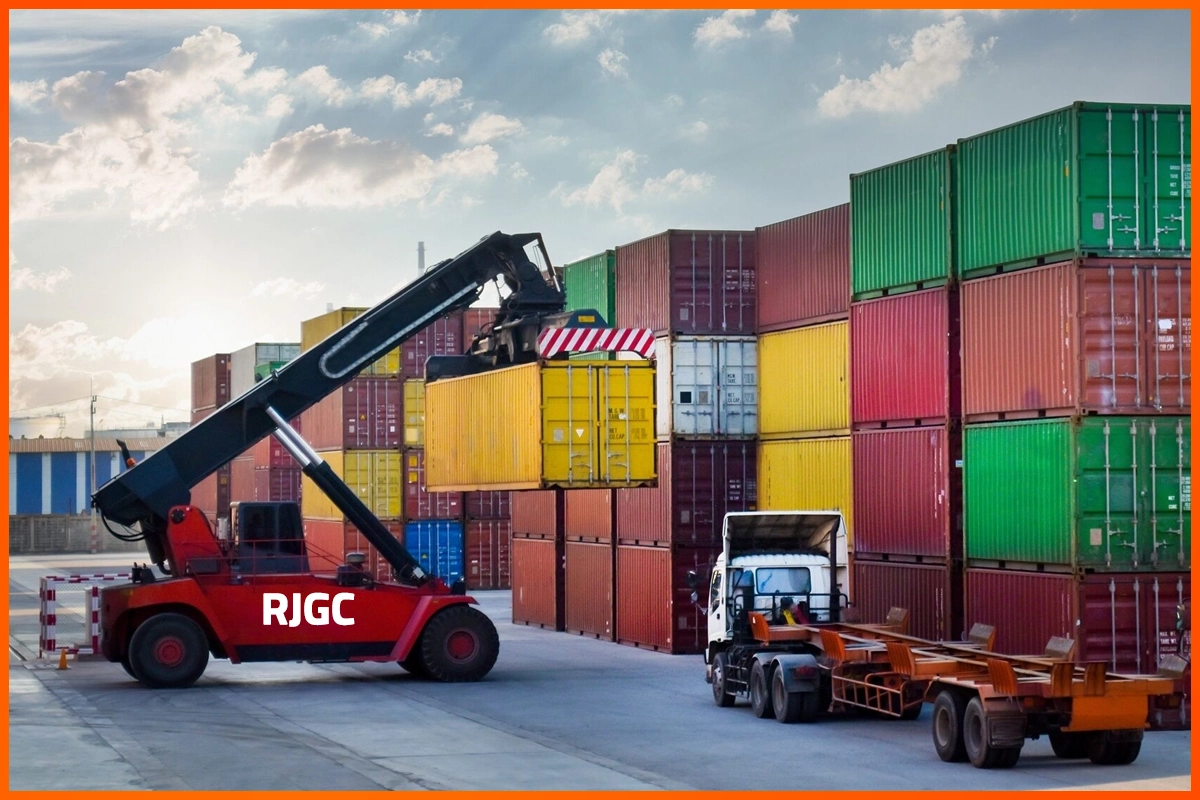
What Is a Reach Stacker?
A reach stacker is a heavy-duty mobile container handling machine designed to lift, transport and stack freight containers and, when appropriately equipped, certain other heavy loads.
Unlike a conventional forklift, a reach stacker uses a telescopic boom fitted with a spreader or another approved lifting attachment. This configuration allows the machine to position loads at different heights and reach into storage rows beyond the nearest container.
Many loaded-container reach stackers offer nominal lifting capacities in the range of 40–45 tonnes in specified configurations. Actual residual capacity decreases as the load moves farther from the machine, and it must always be verified from the load chart.
Watch a Reach Stacker in Action
This demonstration shows the movement and handling capabilities of a reach stacker in a container handling environment.
Key Features and Capabilities of Reach Stackers
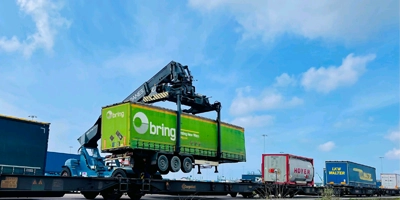
Loaded-container reach stackers can handle substantial container weights using an approved spreader. Capacity depends on the machine, container position, lifting radius and load chart, rather than nominal tonnage alone.
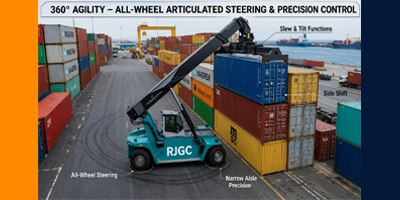
Purpose-built steering systems and spreader positioning functions support accurate container handling. Depending on the model, functions may include spreader rotation, side shift, and tilt adjustment.
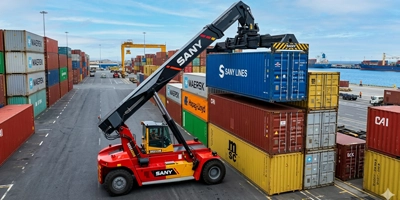
Suitable models can stack containers several levels high and access additional storage rows. The permitted stack height depends on container weight, row number, machine specifications and site conditions.
How Does a Reach Stacker Work?
A reach stacker uses a hydraulically operated telescopic boom to raise and position containers. Its spreader connects to the container's designated lifting points, allowing the machine to lift and relocate the load.
Main Operating Functions


Reach Stacker vs Heavy-Duty Forklift: What Is the Difference?
Both machines can handle heavy loads, but their lifting mechanisms and primary applications are different.
Heavy-Duty Forklift
Uses a mast and approved forks or specialized attachments to handle heavy industrial loads. Container-handling configurations may be suitable for certain stacking operations, depending on their rated design.
Typical advantage: Handling varied heavy loads and specific ground-level or container handling applications.
Reach Stacker
Uses a telescopic boom and spreader to lift, transport and position containers at different heights and working radii.
Typical advantage: Flexible container handling, multi-row access and repositioning within intermodal storage yards.
Productivity and required yard space depend on the actual site layout, container mix, stacking pattern, travel distances and equipment capacity. A fixed percentage of space savings cannot be assumed for every application.
When Should You Choose a Reach Stacker?
- Container terminals and inland depots.
- Rail and intermodal freight facilities.
- Loaded-container stacking and transport.
- Container repositioning across storage rows.
- Industrial logistics yards with suitable ground and access.
- Continuous, very high-volume container handling may favor gantry systems.
- Dedicated empty-container handling may favor purpose-built empty-container handlers.
- Mixed industrial loads may be better suited to heavy-duty forklifts.
- Restricted ground capacity or access may require a different handling method.
Where Are Reach Stackers Used?
Container stacking, relocation, truck loading and unloading, and yard organization.
Transferring containers between designated rail wagons, trucks and container storage areas using approved operating procedures.
Handling and repositioning containers within inland storage and distribution facilities.
Container handling for manufacturing, logistics and project cargo operations where the equipment is suitable.
Important Factors Before Selecting a Reach Stacker
Container weight alone does not determine the correct reach stacker model. The equipment must be evaluated against the full handling and site requirements.
Reach Stacker Selection Checklist
Reach Stacker Safety and Operator Requirements
Safe reach stacker operation depends on correct equipment selection, suitable yard conditions, competent operators and compliance with the machine's rated limits.
- Follow the manufacturer's load chart for each lifting position.
- Verify pavement strength and ground conditions before operation.
- Ensure the correct container engagement and spreader locking procedure.
- Use trained and authorized operators.
- Maintain safe separation from pedestrians, trucks and other equipment.
- Carry out pre-use inspections and report defects immediately.
- Observe applicable operating procedures and equipment-specific safety standards.
Safety features and compliance documentation vary by manufacturer, model and configuration. They should be checked against the actual machine specification instead of assumed.
Reach Stacker Frequently Asked Questions
Conclusion: Why Reach Stackers Matter in Container Logistics
Reach stackers offer a flexible solution for lifting, transporting and stacking intermodal containers within ports, rail terminals and logistics yards. Their telescopic boom configuration provides handling options that differ from conventional heavy forklifts.
The right machine must be selected according to container weights, required stacking positions, actual load charts, site conditions and operational demand.
Need Help Evaluating Container Handling Equipment?
Contact Ramz Rikaz Al Joudah Trading Est. to discuss your material handling requirements, project location, container specifications and operating conditions. Reach stacker availability and the scope of any proposed equipment solution must be confirmed for each inquiry.
Comments (0)