Solid Tires (Black and Non-Marking) vs Pneumatic Tires: Which One Is Better for Your Forklift?
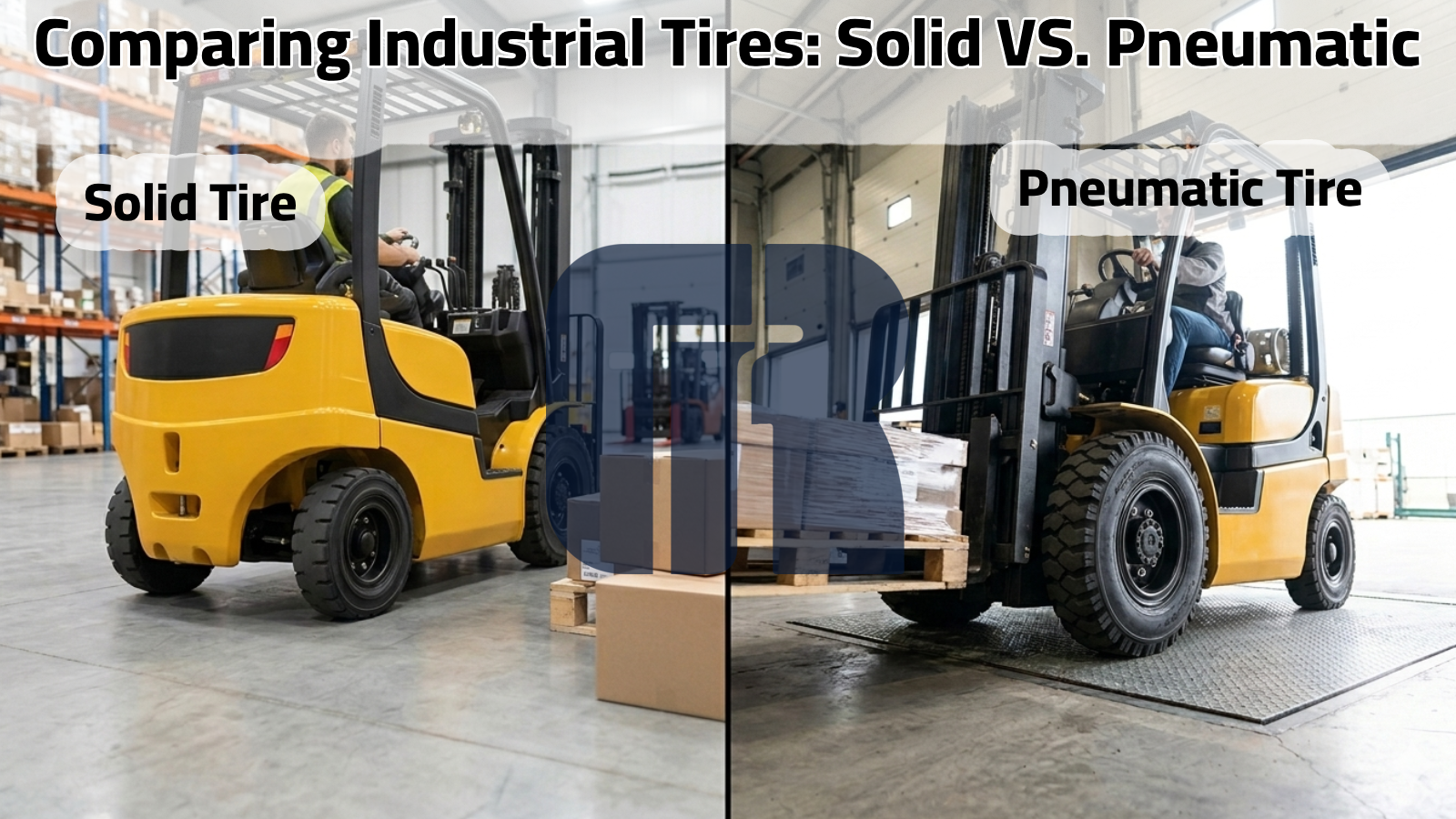
Choosing the right forklift tire affects far more than basic movement. Tire type has a direct impact on traction, operator comfort, floor protection, puncture risk, maintenance needs, and overall machine performance. In many operations, the wrong tire choice can increase downtime, damage indoor floors, reduce efficiency, or make the forklift less suitable for the actual working environment.
Solid vs Pneumatic Forklift Tires: Black, Non-Marking and Air-Filled Compared
Choosing the right forklift tires affects traction, operator comfort, floor protection, puncture resistance, maintenance requirements, and overall productivity. This guide compares black solid tires, non-marking solid tires, and pneumatic tires to help businesses select the most suitable option for warehouse, industrial, and outdoor material handling operations.
Why Choosing the Right Forklift Tires Matters
Forklift tires are essential to machine stability, load handling, braking, and operator comfort. The wrong tires can increase downtime, damage floors, reduce traction, or make equipment unsuitable for the workplace.
Indoor warehouses, food production facilities, loading areas, and outdoor industrial yards require different tire characteristics. The correct choice depends on the actual operating environment rather than tire price alone.
Main Forklift Tire Types: Solid, Non-Marking and Pneumatic
Solid rubber industrial tires that do not require air pressure. They provide strong puncture resistance and are widely used in warehouses, factories, and industrial handling applications.
Specially formulated solid tires designed to minimize visible tire marks on floors. They are commonly supplied in light colors and used in clean or floor-sensitive facilities.
Air-filled tires designed to provide cushioning and shock absorption. Suitable designs can improve comfort and travel performance on uneven outdoor surfaces.
What Are Black Solid Forklift Tires?
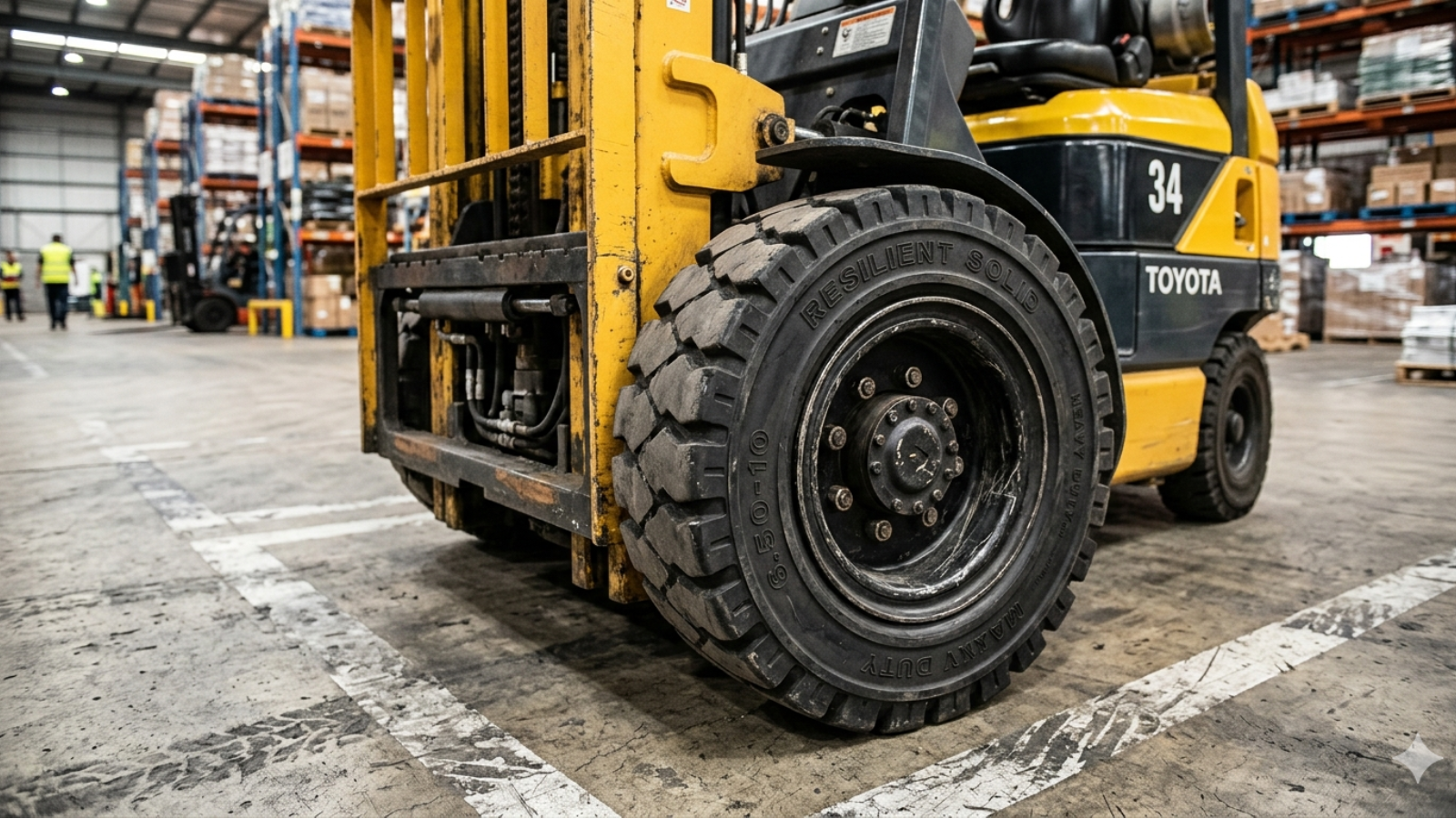
Black solid tires are constructed from solid rubber compounds rather than being inflated with air. Depending on their design and tread, they can be used in industrial environments where durability and puncture resistance are priorities.
They are common on forklifts operating over suitable concrete and other firm industrial surfaces. Their suitability for outdoor use depends on tire construction, ground conditions, and forklift specifications.
Advantages of Black Solid Forklift Tires
Disadvantages of Black Solid Forklift Tires
Standard black rubber tires may leave visible marks on light-colored, polished, or sensitive industrial flooring. This can be a concern in facilities with strict cleanliness requirements.
Compared with air-filled tires, solid designs generally transmit more vibration on uneven ground. Ride comfort varies by tire construction, compound, machine, and operating surface.
What Are Non-Marking Solid Forklift Tires?
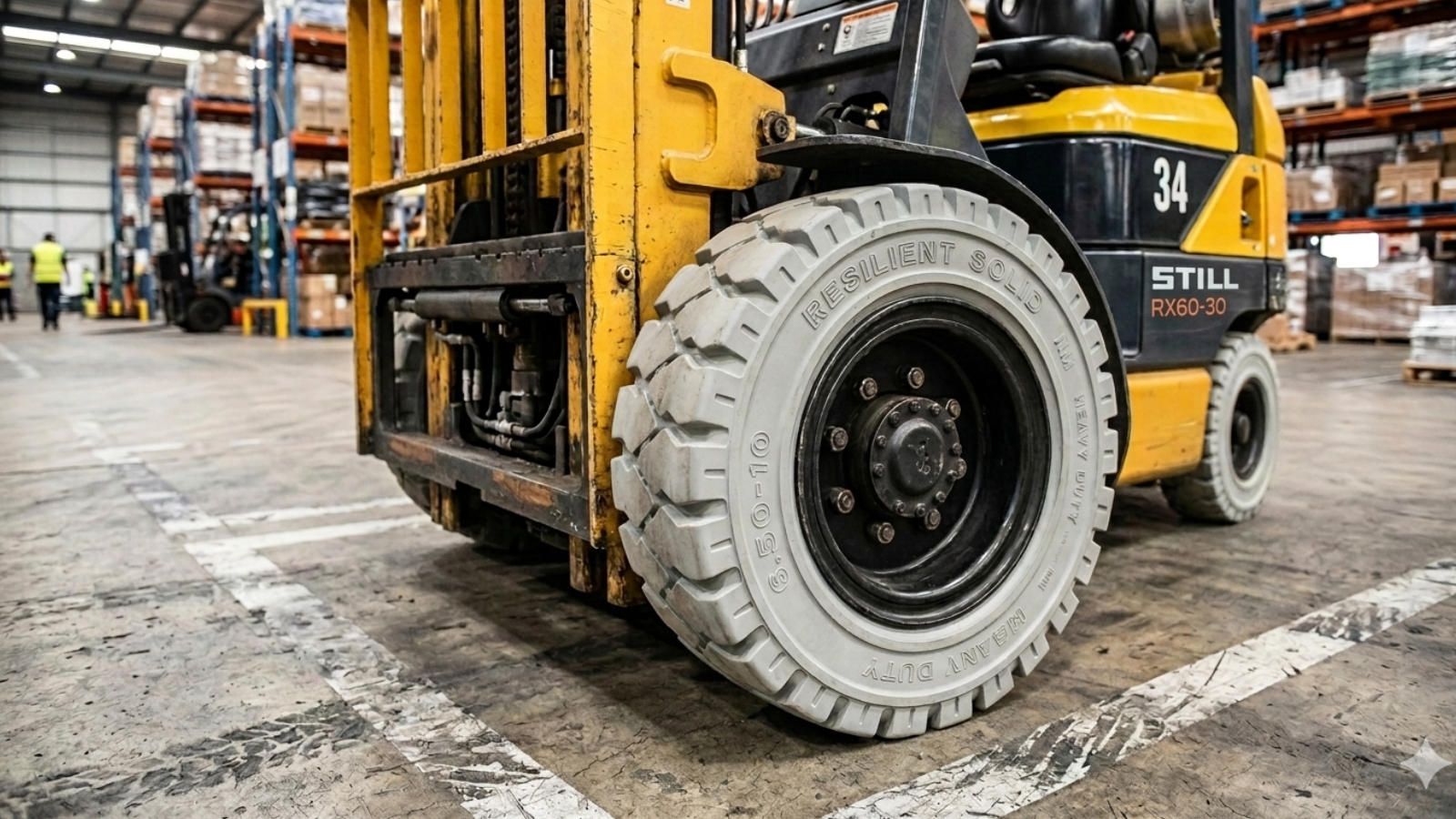
Non-marking tires are made from rubber compounds intended to reduce visible residue and tire marks. They are frequently used in food processing, pharmaceutical operations, clean warehouses, electronics facilities, and finished indoor spaces.
Although commonly called white forklift tires, non-marking tires may be produced in several light-colored compounds. The manufacturer must confirm the actual non-marking specification.
Cleaner Floors
Help minimize the black rubber marks associated with conventional tire compounds. They do not guarantee that floors will remain completely free from all marks or contamination.
Puncture Resistance
Solid non-marking tires are not inflated with air and therefore avoid conventional puncture-related air loss.
Clean Facility Applications
Useful in environments where floor appearance and rubber residue control are important. Additional hygiene requirements must be assessed separately.
Possible Additional Cost
Non-marking specifications may cost more than standard black solid tires, depending on the manufacturer, dimensions, and rubber compound.


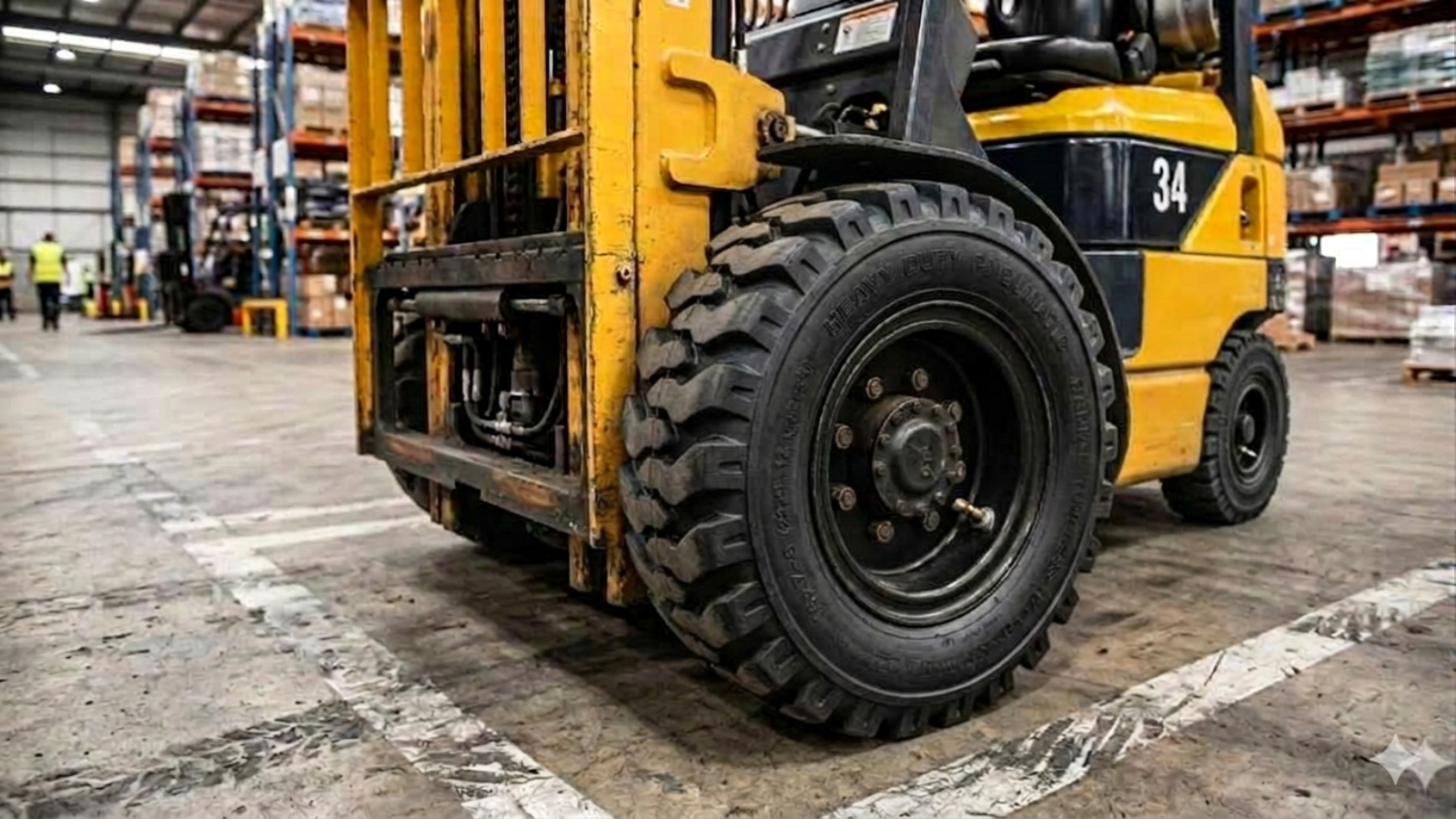
What Are Pneumatic Forklift Tires?
Pneumatic tires are filled with compressed air and provide cushioning when traveling over suitable uneven surfaces. They are used on forklifts designed for outdoor yards, loading areas, and mixed industrial operating conditions.
Their air-filled construction can improve shock absorption, but overall suitability depends on the tire tread, inflation pressure, forklift design, and ground conditions.
Main Advantages of Pneumatic Forklift Tires
Air-filled tires absorb road irregularities and can reduce vibration transferred to the operator during longer shifts.
Pneumatic tires can provide more cushioning over gravel and partially prepared outdoor surfaces than conventional solid tires.
Suitable tread patterns can improve traction on certain outdoor surfaces. Performance depends on tire design, ground condition, and the forklift.
Disadvantages of Pneumatic Forklift Tires
Air-filled tires can suffer punctures from sharp objects, scrap metal, and debris. Inflation pressure must be monitored according to manufacturer requirements. Air loss or tire damage can cause unexpected downtime. Some tread compounds may leave marks on sensitive floors. Not every forklift can be converted from solid to pneumatic tires.
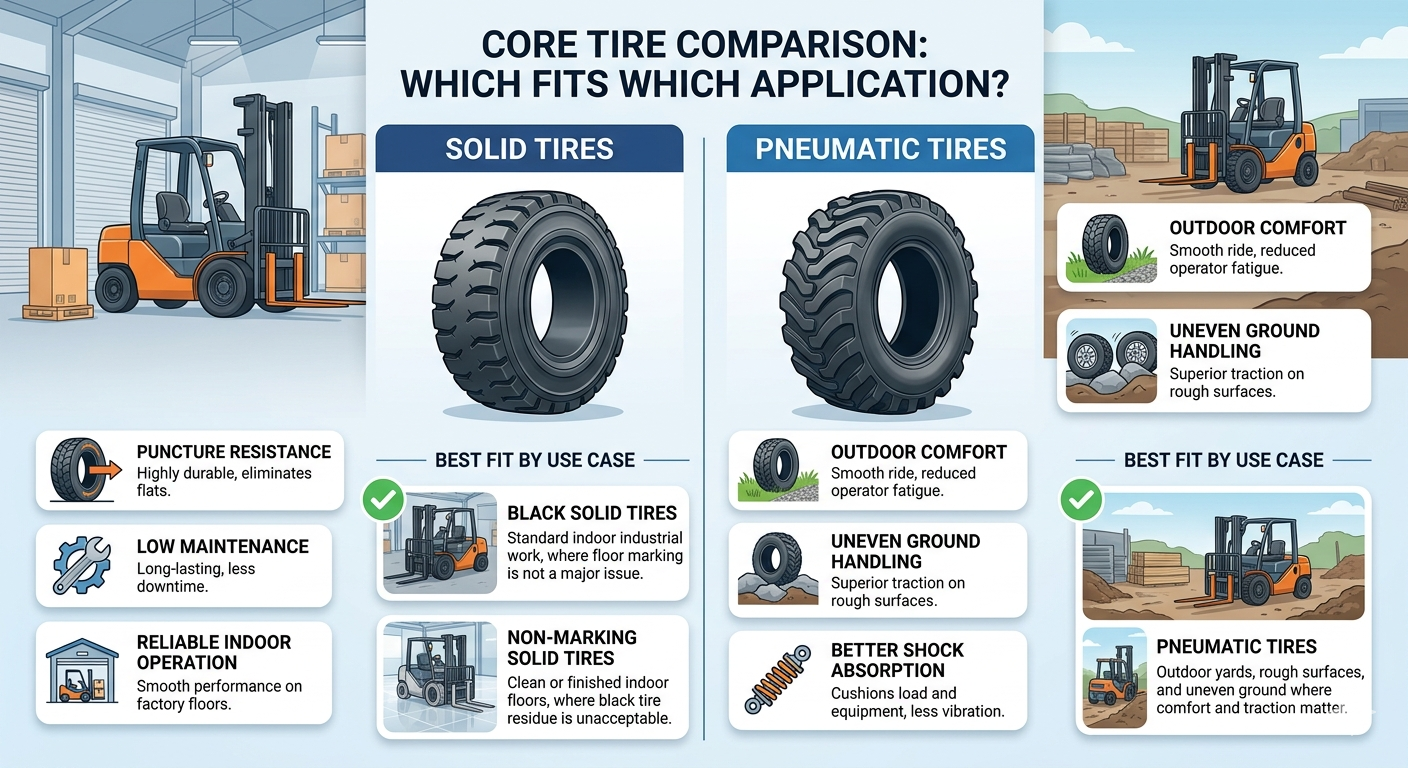
Solid vs Pneumatic Forklift Tires: Which Type Should You Choose?
Each tire type provides different benefits. Black solid tires emphasize puncture resistance and industrial durability. Non-marking solid tires add floor protection benefits, while pneumatic tires provide air cushioning for suitable outdoor conditions.
Recommended Tire Type by Application
Common Mistakes When Selecting Forklift Tires
Choosing tires based only on purchase price or appearance can lead to unnecessary downtime and operating expenses. Tire dimensions, construction, load rating, speed rating, and manufacturer compatibility must be verified.
Other mistakes include using black tires where visible floor marks are prohibited, ignoring puncture risks in debris-filled yards, and assuming pneumatic tires automatically make a standard warehouse forklift suitable for rough terrain.
Always evaluate the operating surface, expected working hours, load requirements, and approved forklift configuration before making a tire selection.
Forklift Rental Solutions for Different Operating Environments
Ramz Rikaz Al Joudah Trading Est. (RJTE) provides forklift rental solutions for warehouses, factories, logistics operations, and industrial applications in Saudi Arabia.
The most suitable forklift and tire configuration depends on the working environment, lifting capacity, load characteristics, floor conditions, and equipment availability.
Final Recommendation: Choosing the Right Forklift Tires
Choose non-marking solid tires where minimizing floor marks is essential.
Choose pneumatic tires for compatible outdoor forklift applications requiring improved cushioning on uneven surfaces.
Always verify manufacturer approval and the machine's operating limitations.
There is no single tire type suitable for every forklift application. Matching the tire specifications to the actual work environment helps improve equipment suitability, floor protection, and operating efficiency.
Need Help Choosing the Right Forklift?
Whether your application involves a warehouse, clean production area, loading dock, or industrial yard, Ramz Rikaz Al Joudah Trading Est. (RJTE) can help review suitable forklift rental configurations based on your operational requirements. Contact us with your lifting capacity, working environment, rental duration, and delivery location.
Comments (0)