Racking Systems Types and How to Choose the Right One for Your Operation
Learn the main types of warehouse racking systems, how each one works, and how to choose the right storage solution based on product type, stock rotation, space, and operational needs.
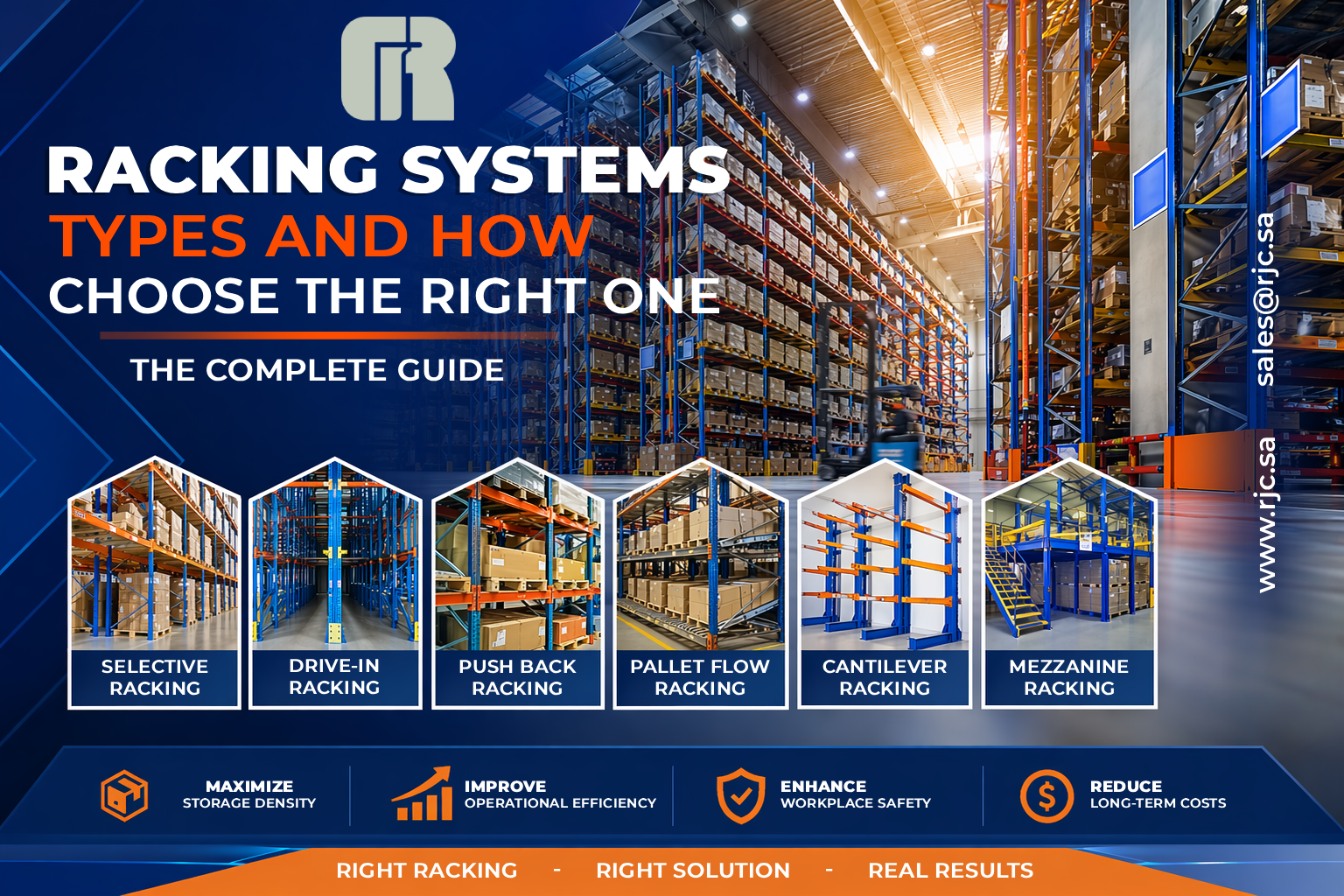
11 Types of Warehouse Racking Systems and How to Choose the Right One
Choosing the right warehouse racking system is essential for efficient storage and material handling. The correct layout can improve storage capacity, inventory accessibility, forklift movements, picking productivity, and workplace safety. This guide explains 11 major types of warehouse racking, their advantages and limitations, and the key factors to consider when designing or upgrading a warehouse.
What Is a Warehouse Racking System?
A warehouse racking system is a structured storage arrangement used to organize palletized products, cartons, spare parts, long materials, and other inventory inside warehouses, factories, and distribution centers.
Racking allows businesses to use available floor area and building height more efficiently while maintaining access for storage, retrieval, replenishment, and picking. Different systems prioritize different objectives: direct access, storage density, stock rotation, automation, or manual order picking.
Why Selecting the Right Racking System Matters
Racking affects more than the number of pallet positions. Its design influences warehouse traffic, inventory control, forklift productivity, and the ability to accommodate future operational changes.
Potential Benefits of a Well-Planned Racking Layout
11 Main Types of Warehouse Racking Systems
1. Selective Pallet Racking
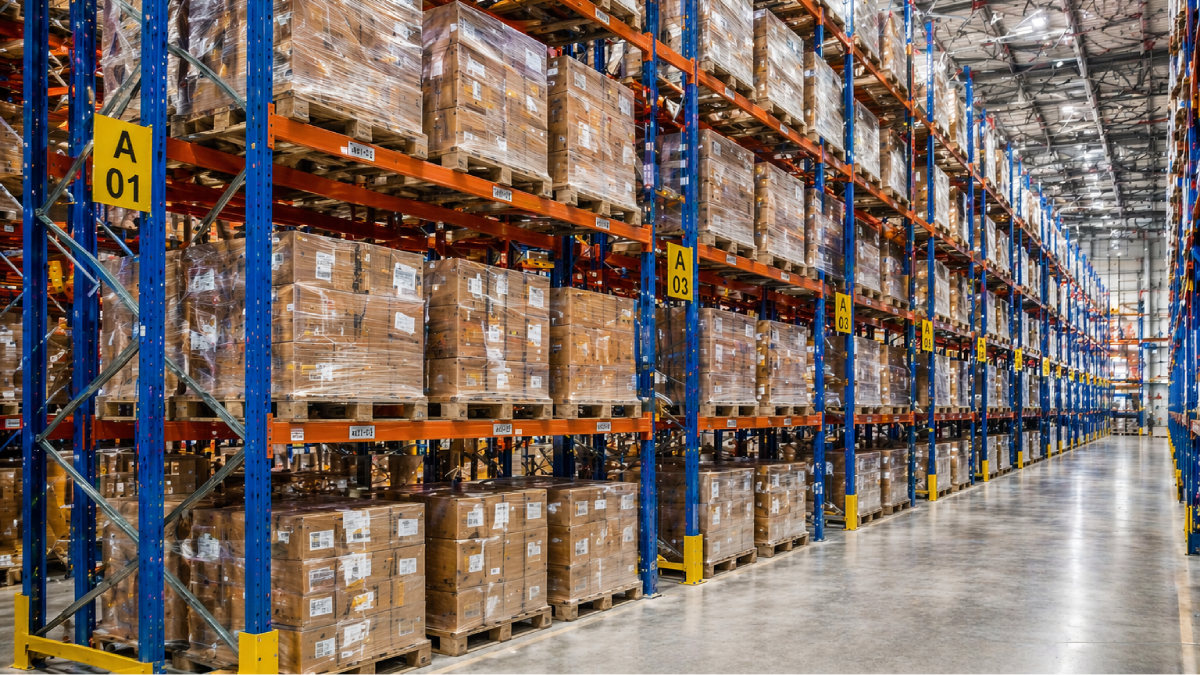
Selective pallet racking is one of the most common warehouse storage systems. Each pallet location is directly accessible, making it suitable for operations with many SKUs and frequent inventory movements.
- Best for: General warehouses, mixed inventory, spare parts, and retail distribution.
- Main advantage: High selectivity and operational flexibility.
- Main limitation: More aisle space than deep-lane systems.
2. Double-Deep Pallet Racking
Double-deep racking stores pallets two positions deep. It reduces the number of aisles required compared with standard selective racking but limits direct access to the rear pallets.
- Best for: Medium SKU variety with several pallets per SKU.
- Main advantage: Improved space utilization.
- Main limitation: Reduced selectivity and the need for compatible deep-reach equipment.
3. Very Narrow Aisle (VNA) Racking
Very Narrow Aisle racking uses narrower operating aisles to increase storage positions within a warehouse footprint. It is particularly useful in high-bay facilities seeking to maximize available building volume.
- Best for: High-bay warehouses and space-constrained operations.
- Main advantage: Greater space efficiency.
- Main limitation: Specialist VNA trucks, precise floor requirements, and careful traffic planning.
A VNA layout must be developed together with the selected truck specifications, lifting heights, guidance arrangements, and floor tolerances.
4. Drive-In and Drive-Through Racking
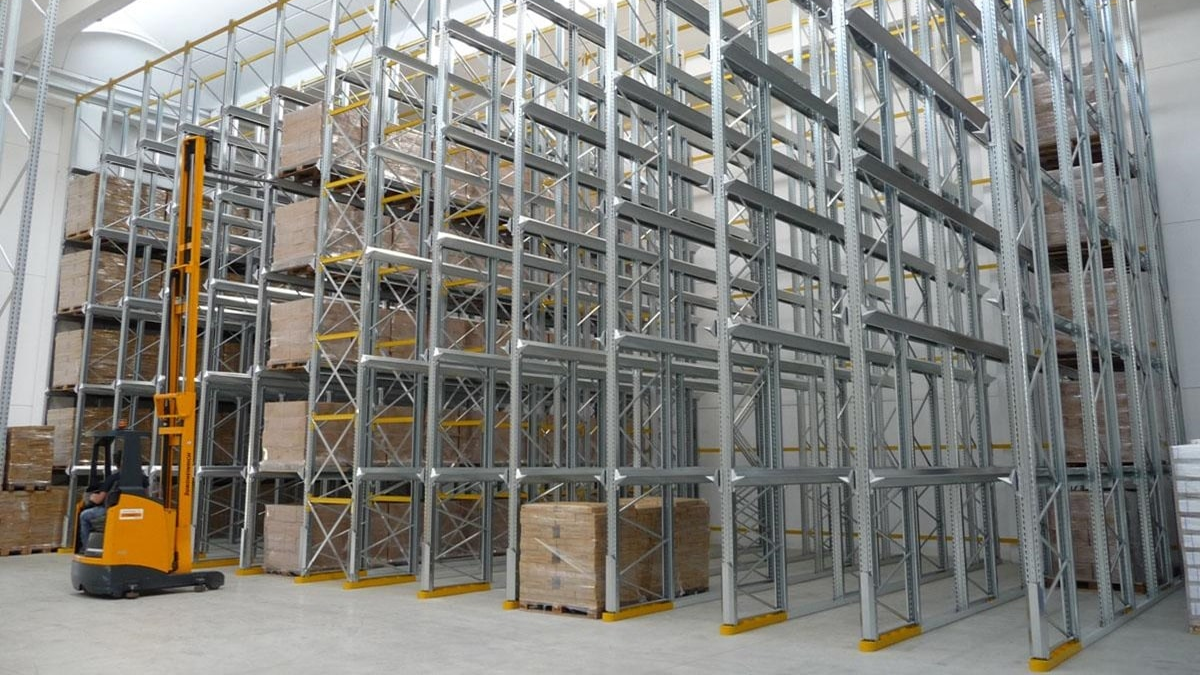
Drive-in and drive-through racking are high-density systems where forklifts enter designated storage lanes to place or retrieve pallets.
Drive-in: Loading and retrieval generally take place from the same side, often supporting LIFO. Drive-through: Access from both ends can support FIFO arrangements where the layout and operating procedures permit.
- Best for: Bulk storage, cold storage, and fewer SKUs with substantial pallet quantities.
- Main advantage: High storage density.
- Main limitation: Reduced selectivity and more forklift movement within the racking structure.
5. Push-Back Racking
Push-back systems store pallets on inclined rails, rollers, or nested carts. New pallets push existing loads farther into the lane. When a front pallet is removed, the next pallet moves toward the retrieval position.
- Best for: Multiple pallets per SKU with moderate selectivity requirements.
- Main advantage: Higher density than standard selective racking.
- Main limitation: Generally follows LIFO rotation.
6. Pallet Flow Racking
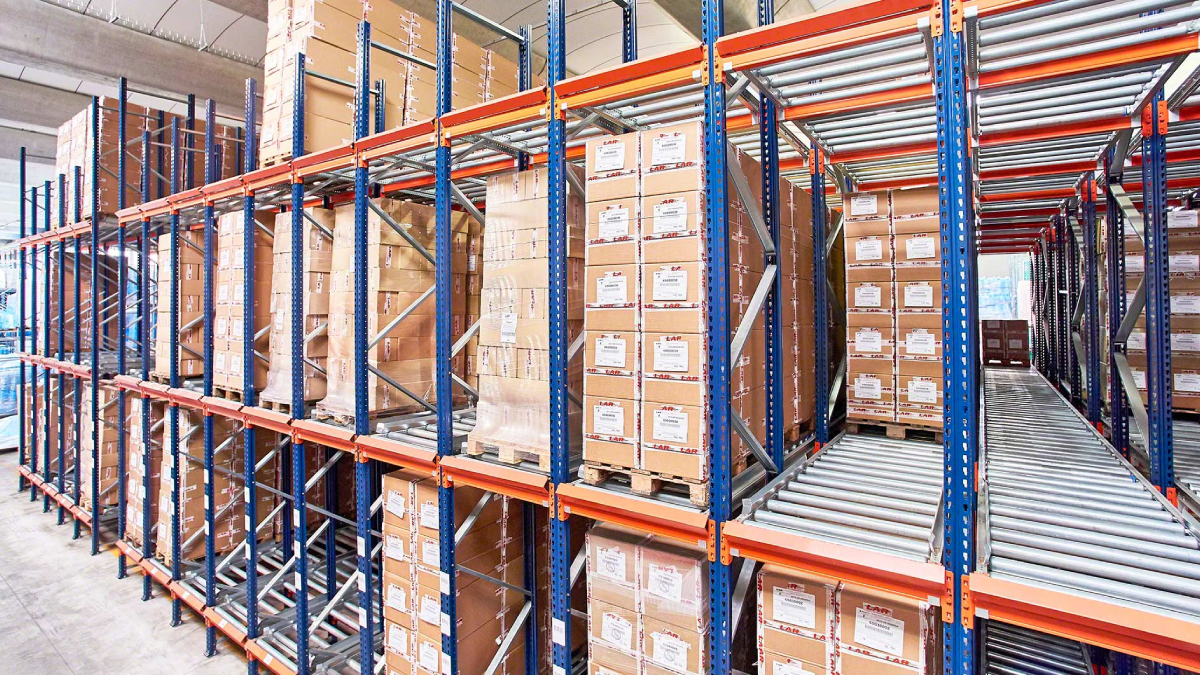
Pallet flow racking uses gravity-driven roller tracks to move pallets from the loading end toward the retrieval end. It supports FIFO stock rotation and can help manage products with time-sensitive inventory.
- Best for: Food, beverages, fast-moving inventory, and batch-controlled stock.
- Main advantage: High-density storage with FIFO capability.
- Main limitation: Greater system complexity and dependence on pallet quality and maintenance.
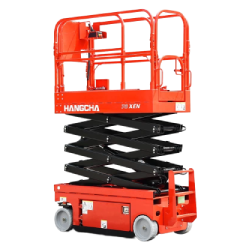


7. Carton Flow Racking
Carton flow racking uses inclined tracks to move cartons, totes, and smaller picking units toward the front picking face. It can separate replenishment from picking and support consistent order fulfillment.
- Best for: E-commerce fulfillment, piece picking, and fast-moving cartons.
- Main advantage: Efficient picking and stock replenishment.
- Main limitation: Product size, weight, and packaging compatibility restrictions.
8. Cantilever Racking
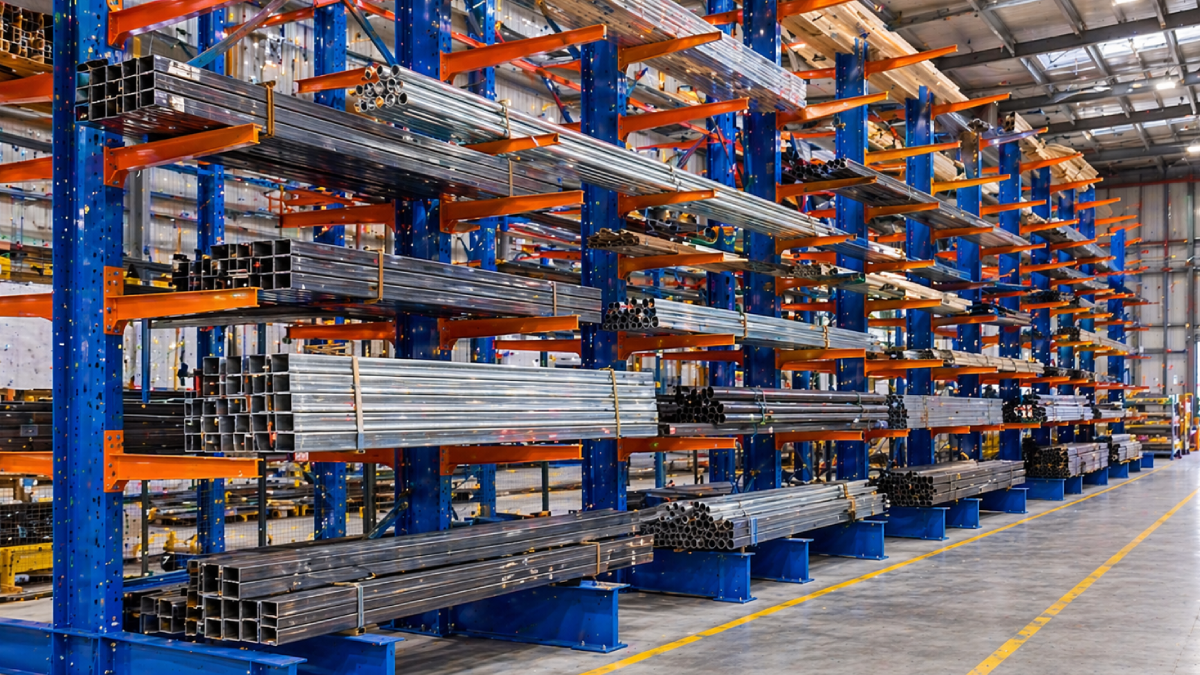
Cantilever racking uses horizontal arms attached to vertical columns, providing accessible storage for pipes, timber, steel sections, boards, and other long or awkward items.
- Best for: Long and non-palletized materials.
- Main advantage: Easy access to oversized loads.
- Main limitation: Less suitable for standard pallet storage without specialized design.
9. Mobile Racking Systems
Mobile racking places rack rows on powered or manually operated movable bases. An access aisle is opened only when needed, reducing permanent aisle space.
- Best for: Cold storage, archives, and space-constrained facilities.
- Main advantage: High storage density.
- Main limitation: Limited simultaneous access to multiple aisles.
10. Mezzanine and Multi-Tier Storage Systems
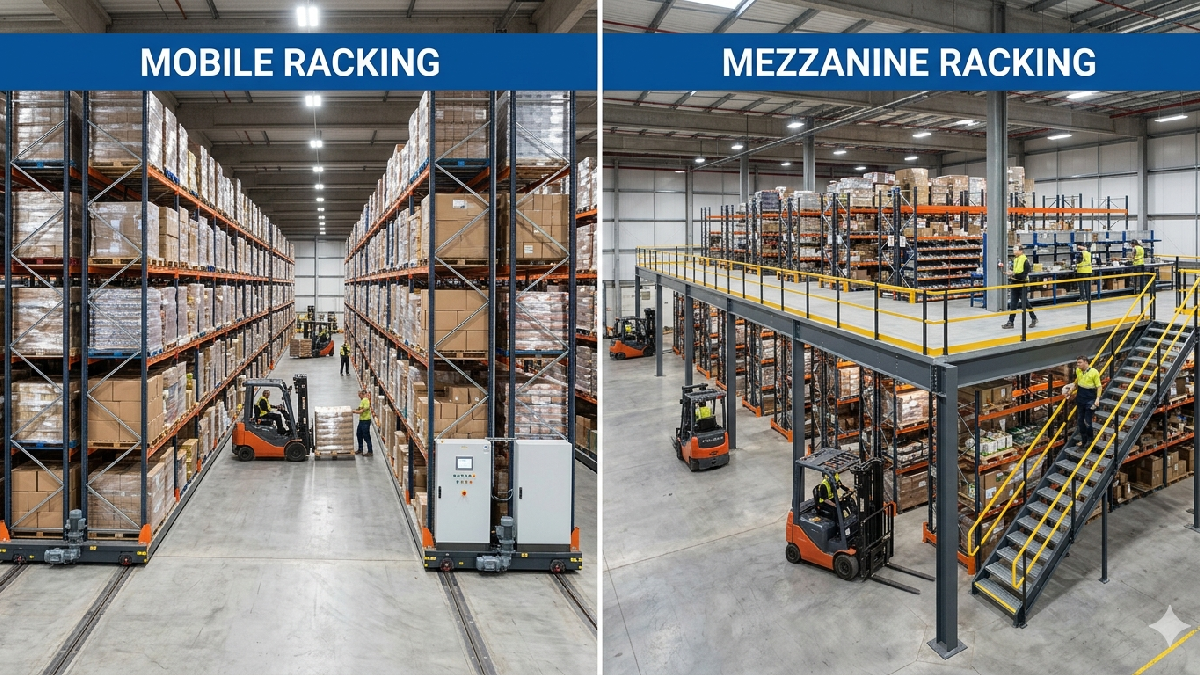
Mezzanine and multi-tier storage systems create additional levels within a building for cartons, spare parts, and manual picking operations.
- Best for: E-commerce, small parts, and manual picking.
- Main advantage: Additional usable space within the same footprint.
- Main limitation: Requires structural verification, safe access, fire protection, and operational planning.
11. Shuttle and Semi-Automated Racking
Shuttle racking uses powered shuttle units to move pallets along storage lanes. It can reduce the need for forklifts to enter deep storage lanes and support repetitive, high-density applications.
- Best for: High-density storage with repeated pallet movements.
- Main advantage: Reduced forklift entry and potentially higher throughput.
- Main limitation: Higher investment, technical complexity, and maintenance needs.
How to Choose the Right Warehouse Racking System
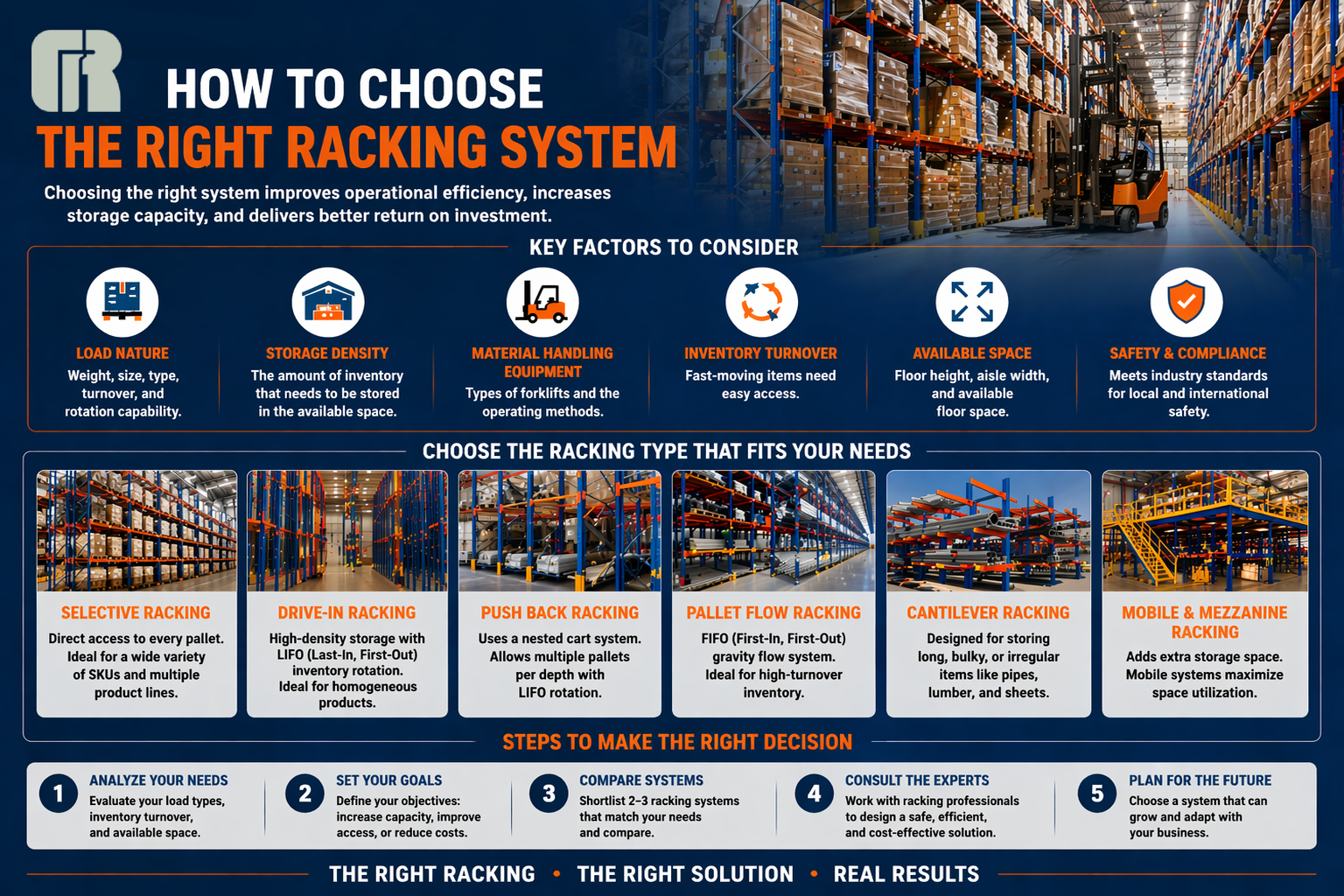
The most suitable storage system depends on inventory characteristics, the warehouse building, forklift specifications, operating processes, and expected future growth.
1. Product Type and Load Characteristics
Record pallet length, width, height, weight, packaging stability, load consistency, and any unusual or fragile products.
2. SKU Count and Pallets per SKU
Many SKUs with small quantities often favor selective access. Fewer SKUs with larger quantities may benefit from deeper storage lanes.
3. Inventory Rotation Method
- FIFO: First In, First Out.
- LIFO: Last In, First Out.
- FEFO: First Expiry, First Out.
Stock rotation requirements influence whether selective, gravity-flow, push-back, or drive-in configurations are practical.
4. Throughput and Picking Frequency
Evaluate daily pallet movements, replenishment, picking frequency, and whether the facility focuses primarily on storage or order fulfillment.
5. Building Layout and Available Space
Consider clear height, structural columns, loading docks, doors, staging areas, evacuation routes, and access restrictions.
6. Floor Condition and Load Capacity
Storage racks impose concentrated loads on the supporting floor. Structural capacity, floor flatness, and anchoring requirements must be checked by qualified professionals.
7. Forklift Type and Working Aisle Width
Reach trucks, counterbalance forklifts, VNA trucks, and other handling equipment have different turning, lifting, and clearance requirements. Confirm the proposed rack dimensions against the actual truck specifications.
8. Racking Safety and Inspection
Include upright protection, load notices, damaged-rack reporting, periodic inspection, pallet quality control, and operator training.
9. Fire Protection and Local Requirements
Review rack height, storage commodity, aisle arrangements, fire protection systems, and applicable building and site regulations.
10. Future Warehouse Expansion
Consider increasing pallet quantities, additional SKUs, changes in picking activity, and the potential introduction of automation or different forklift models.
Which Racking System Is Best for Your Industry?
Common Racking Applications
Common Mistakes When Choosing Warehouse Racking
Choosing only on initial purchase price. Focusing on maximum density while ignoring inventory access. Ignoring pallet condition and dimensional consistency. Failing to verify forklift aisle and lift-height requirements. Overlooking floor bearing capacity and building constraints. Ignoring fire protection and safety requirements. Copying another warehouse layout without reviewing the actual workflow.
Final Recommendations for Warehouse Racking Selection
Consider deep-lane or flow systems when storage density or inventory rotation is the main operational priority.
Evaluate VNA, mobile, or automated systems when facility dimensions, material flow, and project economics support them.
The final layout must be assessed for structural capacity, handling equipment compatibility, safety, and fire protection.
The best racking system is not necessarily the one that stores the greatest number of pallets. It is the one that matches your products, daily material movements, access requirements, building limitations, and growth strategy.
Planning a New Warehouse or Racking Layout?
Selecting warehouse handling equipment should be coordinated with the proposed racking layout, aisle widths, lift heights, pallet dimensions, and load weights. Ramz Rikaz Al Joudah Trading Est. can discuss forklift and material handling equipment requirements for your operation. Structural racking design and certification should be handled by qualified specialists.


Comments (0)