Lithium-Ion vs Lead-Acid Forklift Batteries: Which Is Better?
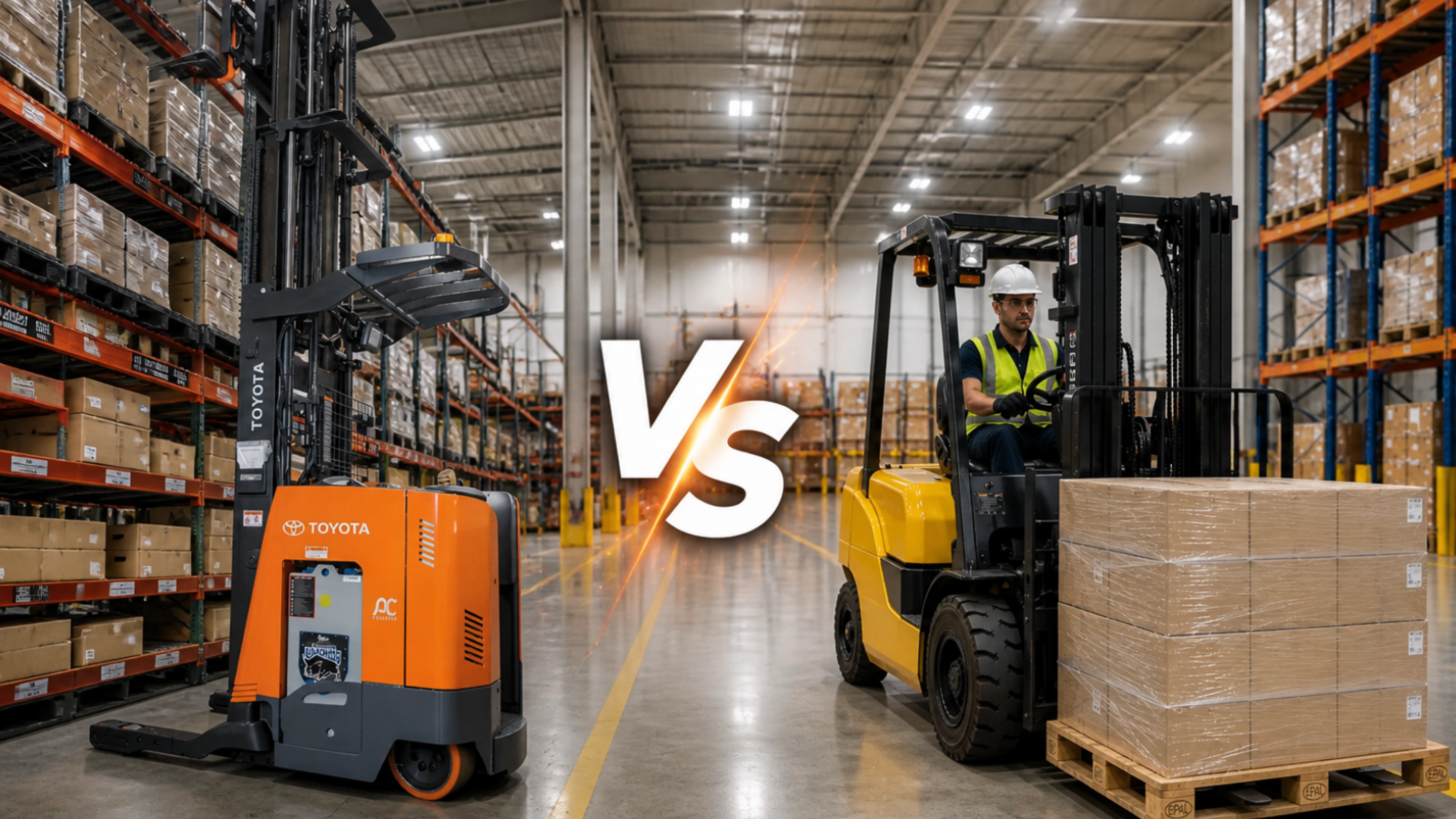
Compare lithium-ion and lead-acid forklift batteries to discover the differences in charging time, lifespan, maintenance, and operating costs. Learn which battery technology best suits your warehouse and material handling operations in Saudi Arabia.
Lithium-Ion vs Lead-Acid Forklift Batteries: Which Is Right for Your Operation?
Understanding the Two Forklift Battery Technologies
Lead-acid batteries use lead plates and an electrolyte to store energy. They are established, often less expensive to buy initially, and well suited to many predictable, single-shift operations. However, conventional flooded batteries require specific charging practices, ventilation and routine maintenance.
Lithium-ion batteries, including lithium iron phosphate (LFP) systems used in material handling, generally allow faster charging and planned top-ups during breaks. They typically incorporate a battery management system (BMS) that monitors operating conditions and protection limits.
This guide compares conventional flooded industrial lead-acid batteries with forklift-approved lithium-ion systems. Results may differ for sealed lead-acid designs and according to the charger, battery capacity, truck configuration and duty cycle.
Flexible charging · Less routine maintenance · Multi-shift potential
Can support opportunity charging during breaks when approved. Usually requires no watering or lead-acid equalization charging. May reduce spare-battery changes in intensive operations. Higher upfront investment and strict truck/charger compatibility requirements.
Usually lower upfront cost · Proven technology · Predictable duty cycles
Often cost-effective for lighter-duty, single-shift applications. May suit facilities with compatible, established charging infrastructure. Flooded batteries require electrolyte checks and connector care. Conventional charging takes longer and may require cooling or battery swaps.
Six Differences That Matter to Fleet Managers
1. Charging Time
Conventional industrial lead-acid batteries may require around 8–10 hours to recharge, excluding possible cooling time. Compatible lithium-ion systems may complete a charge in approximately 1–2 hours or accept shorter top-ups. Actual charging time depends on capacity, charger output and manufacturer specifications.
2. Multi-Shift Availability
Opportunity charging during planned breaks is a major lithium-ion advantage with the right charger. Repeated partial charging of conventional lead-acid batteries can shorten service life unless the battery system is designed and managed for that method.
3. Maintenance
Flooded lead-acid batteries require scheduled inspections, cleaning and distilled-water maintenance under manufacturer instructions. Lithium-ion removes most of those tasks, but chargers, cables, cooling systems and battery alerts must still be monitored.
4. Total Cost of Ownership
Lead-acid often costs less initially. Lithium-ion may offset its premium through reduced downtime, maintenance, energy use and replacement needs. The outcome is site-specific: compare real operating hours and costs rather than relying on the battery price alone.
5. Heat and Working Environment
Saudi summer conditions make battery and charger temperature ratings important. Check ventilation, cooling and protection against direct sun and dust. Lithium systems do not tolerate unlimited heat; a BMS may restrict charging or operation outside approved limits.
6. Safety and Facility Setup
Charging flooded lead-acid batteries can release hydrogen and calls for appropriate ventilation and acid-handling controls. Lithium-ion does not require acid or water filling but introduces different electrical and thermal risks. Approved chargers, operator training and emergency procedures remain essential.
Which Battery Fits Your Operation?
Single-Shift Warehouse
If the truck works moderate hours and can be charged overnight, lead-acid can remain a sensible choice, especially where capital cost matters and a disciplined maintenance process exists.
Two- or Three-Shift Distribution Center
Where trucks are needed throughout the day, lithium-ion can provide a productivity advantage through planned short charging periods and fewer battery swaps, provided electrical capacity is adequate.
Hot or Dusty Operating Area
Do not select a battery by chemistry alone. Ask for charging and operating temperature limits, ingress protection, ventilation or cooling requirements and a maintenance plan appropriate for the location.
Converting an Existing Forklift
Never assume a drop-in lithium replacement is safe. Confirm OEM approval and check voltage, dimensions, battery weight and counterbalance, charging profile, controls communication and any required modifications.
How to Compare Five-Year Battery Costs
The most useful comparison is total cost of ownership (TCO) across the same time horizon and operating workload:
Request comparable quotations for the same forklift and duty cycle. Include actual energy use, shifts per day, break windows, maintenance labor, battery warranty and usable capacity. Lithium-ion may be more economical for heavy utilization; lead-acid may still be the better financial decision for lighter workloads.
Battery Care and Charging Best Practices
Use a charger approved for the particular battery system. Never interchange chargers without authorization. Follow the manufacturer's charging, discharge and temperature limits rather than assuming one rule fits all batteries. Maintain a designated safe charging area and inspect plugs, cables and housekeeping routinely. For flooded lead-acid batteries only, check electrolyte and add distilled water as instructed. Never open lithium-ion or sealed batteries for watering. If unusual smells, swelling, leakage or thermal alarms occur, stop using the equipment and follow emergency procedures and OEM guidance. Do not attempt unqualified repairs.
For a related checklist, see our Forklift Battery Daily Inspection Guide, particularly relevant to conventional flooded batteries.
Six Questions Before You Choose
Have these details ready before requesting a quotation or changing your fleet's battery strategy.
Frequently Asked Questions
Is lithium-ion always better than lead-acid?
No. Lithium-ion may be ideal for intensive multi-shift operations, while lead-acid can be cost-effective when usage is moderate and there is enough time for proper charging and maintenance.
Can a lithium-ion forklift be charged during lunch breaks?
Yes, when the truck, battery and charger are designed and approved for opportunity charging, and site power and temperature conditions permit it.
Do lithium-ion forklift batteries need distilled water?
No. Lithium-ion systems do not require watering. Watering applies only to certain flooded lead-acid batteries under manufacturer instructions.
Can I replace any lead-acid battery with lithium-ion?
Not automatically. Obtain manufacturer approval and validate voltage, mass, counterweight, dimensions, charging and control-system compatibility.
Final Recommendation: Match the Battery to the Duty Cycle
Looking for the Right Electric Forklift?
Explore our forklifts for sale and rental. Share the forklift model, shift schedule and site conditions so our team can help identify the specifications you should compare.
Technical References
This guide draws on information from Crown Equipment, Toyota Material Handling and OSHA battery-charging safety guidance. Times and comparisons are illustrative; they are not guaranteed specifications for every model.

Comments (0)